Repeated Measures (cont.)
2024-11-18
Announcements
- HW8 posted and due Friday Nov 22 11:59p
- MP2 surveys due on Friday Nov 22 11:59p (Moodle)
- Office hours
- Tuesday 10:30a - 11:30a
- Friday 3:00p - 4:00p
- Where to get HW8 help
- Spinelli center tutoring Sun-Thurs 7-9p, Sabin-Reed 301.
- Post questions to #hw8-questions channel on Slack!
- Direct message me on Slack.
Agenda
- Repeated measures
- MP2 work time
Warm-up: Tuplips
A plant breeder wishes to study the effects of soil drainage and variety of tulip bulbs on flower production. Twelve 3m by 10m experimental sites are available in the test garden–each is a .5m deep trench. You can manipulate soil drainage by changing the ratio of sand to clay for the soil you put in a trench. After talking to your collaborator, you decided that four different levels of soil drainage would suffice. You’ll be testing 15 different types of tulips, and measuring flower production in the spring.
Repeated Measures
Between Subjects versus Within Subjects
Thought experiment:
Think of your MP1 project. What would your study have been like if every participant saw every condition and gave a response after each condition?
This would have been a within-subjects design. What you actually did for MP1 was a between-subjects design.
3-min free write: What would have been the pros and cons of doing your MP1 this way?
Diabetic Dogs
The disease diabetes affects the rate of turnover of lactic acid in a system of biochemical reactions called the Cori cycle. This experiment compares two methods of using radioactive carbon-14 to measure rate of turnover. Method 1 is injection all at once, and method 2 is infused continuously. 10 dogs were sorted into two groups, 5 were controls and 5 had their pancreas removed (to make it diabetic). The rate of turnover was then measured twice for each dog, once for each method. The order of the two methods was randomly assigned.
Split-Plot Design
If you suspect a design in a split-plot design, you should be able to answer the following questions:
- What are the whole plots, that is, what is the nuisance factor?
- What is the between-blocks factor? Is it observational or experimental?
- What is the within-blocks factor? Is it observational or experimental?
Osomoregulation
Worms that live at the mouth of a river must deal with varying concentrations of salt. Osomoregulating worms are able to maintain relatively constant concentration of salt in the body. An experiment wanted to test the effects of mixtures of salt water on two species of worms: Nereis virens (N) and Goldfingia gouldii (G). Eighteen worms of each species were weighted, then randomly assigned in equal numbers to one of three conditions. Six worms of each kind were placed in 100% sea water, 67% sea water, or 33% sea water. The worms were then weighted after 30, 60, and 90 minutes, then placed in 100% sea water and weighted one last time 30 minutes later. The response was body weight as percentage of initial body weight.
Parsnip Plants
Under the control conditions of this study, wild parsnip plants averaged about a thousand seeds from their first set of flowers (primary umbels), about twice as many from the second set of flowers, but only about 250 from the third set. For plants attacked by the parsnip webworm, which destroyed most of the primary umbels, the pattern was quite different: the seed production from primary, secondary, and tertiary umbels averaged about 200, 2400, and 1300, respectively.
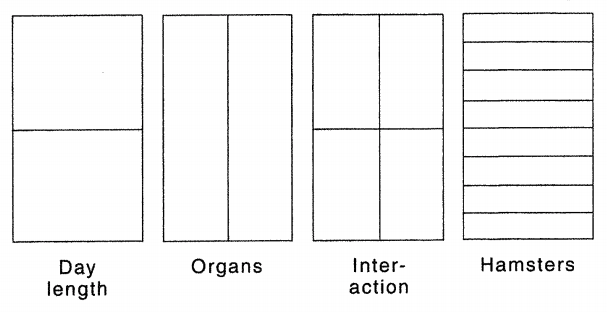
Blocking + Random Assignment + Crossing
Design 4: Split Plot/Repeated Measures Design
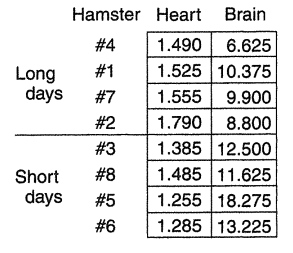
Blocking + Random Assignment + Crossing
Design 4: Split Plot/Repeated Measures Design
MP2 Work Time
- MP2 surveys for pre-approval due on Friday Nov 22 11:59p (Moodle)
- Revisions made over the weekend and Monday
- Class is cancelled on Monday
- Remote data collection begins on Monday