2024-10-07
Your completed Qualtrics experiments are due for Pre-Approval by Fri Oct 11 11:59p on Moodle.
I should be able to see any images you used or links to media. I’ll be paying particular attention to your consent form. It’s not unusual for me to ask for revisions before you launch your study.
I will give you approval or revisions via Slack direct messages. Watch out for those!
Once you have completed any revisions and receive approval from me you can complete the following checklist and then share your anonymous survey link.
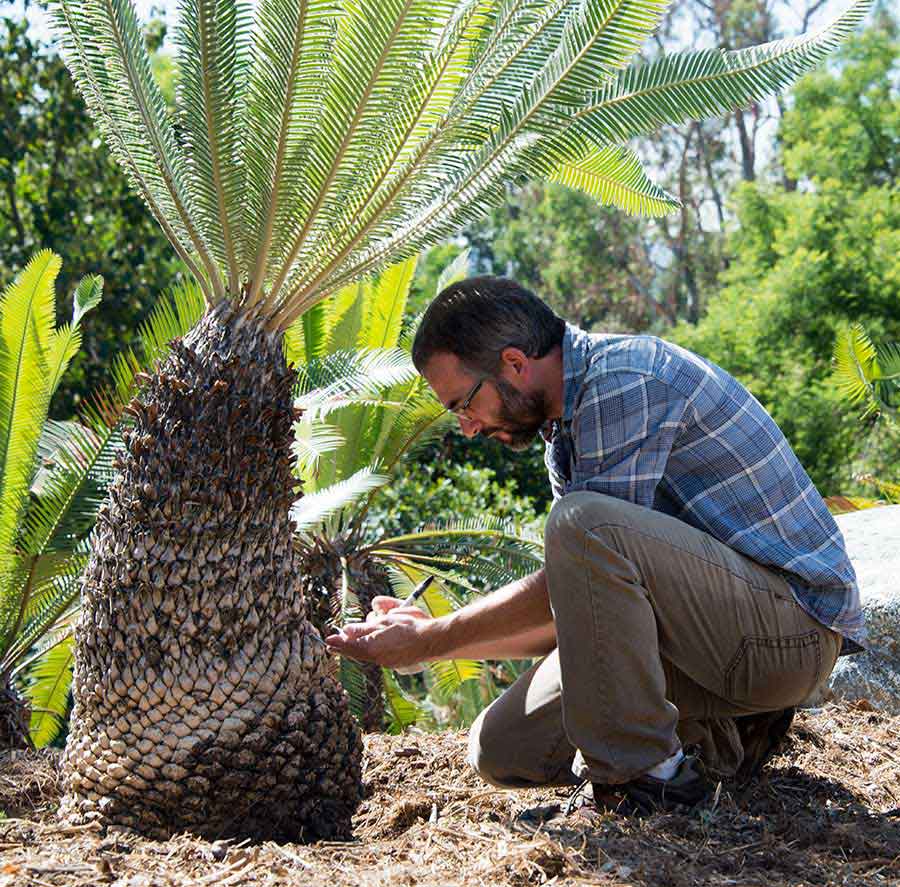
Modern zoos try to reproduce natural habitats in their exhibits as much as possible. They try to use appropriate plants, but these plants can be infested with inappropriate insects. Cycads (plants that look vaguely like palms) can be infected with mealybugs, and the zoo wishes to test three treatments: 1) water, 2) horticultural oil, and 3) fungal spores in water. Nine infested cycads are taken to the testing area. Three branches are randomly selected from each tree, and 3 cm by 3 cm patches are marked on each branch. The number of mealybugs on the patch is counted. The three treatments then get randomly assigned to the three branches for each tree. After three days the mealybugs are counted again. The change in number of mealybugs is computed (\(before-after\)).
Modern zoos try to reproduce natural habitats in their exhibits as much as possible. They try to use appropriate plants, but these plants can be infested with inappropriate insects. Cycads (plants that look vaguely like palms) can be infected with mealybugs, and the zoo wishes to test three treatments: 1) water, 2) horticultural oil, and 3) fungal spores in water. Nine infested cycads are taken to the testing area. The number of mealybugs on each tree is counted. The three treatments then get randomly assigned to the treatments, three trees each treatment. After three days the mealybugs are counted again. The change in number of mealybugs is computed (\(before-after\)).
Male albino laboratory rats are used routinely in many kinds of experiments. This experiment was designed to determine the requirements for protein in their food. Specifically, the experiment is interested in testing five levels of protein (8.68, 12, 15, 18, and 21% of diet). Baby rats were separated into ten groups of 5 to form groups of approximately the same weight. The 5 rats in each group were randomly assigned to each of the 5 conditions. Body weight and food consumption were measured twice weekly, and the average daily weight gain over 21 days was recorded.
Male albino laboratory rats are used routinely in many kinds of experiments. This experiment was designed to determine the requirements for protein in their food. Specifically, the experiment is interested in testing five levels of protein (8.68, 12, 15, 18, and 21% of diet). 50 baby rats were randomly assigned to each of the 5 conditions. Body weight and food consumption were measured twice weekly, and the average daily weight gain over 21 days was recorded.
This experiment is interested in the blood concentration of a drug after it has been administered. The concentration will start at zero, then go up, and back down as it is metabolized. This curve may differ depending on the form of the drug (a solution, a tablet, or a capsule). We will use three subjects, and each subject will be given the drug three times, once for each method. The area under the time-concentration curve is recorded for each subject after each method of drug delivery.
This experiment is interested in the blood concentration of a drug after it has been administered. The concentration will start at zero, then go up, and back down as it is metabolized. This curve may differ depending on the form of the drug (a solution, a tablet, or a capsule). We will use nine subjects, and randomly assign subjects to one of the three delivery methods. The area under the time-concentration curve is recorded for each subject after being given the drug.
Raise your hand if you have any questions!